after Hungary and Bulgaria, Ukraine's case for NATO is stronger than ever
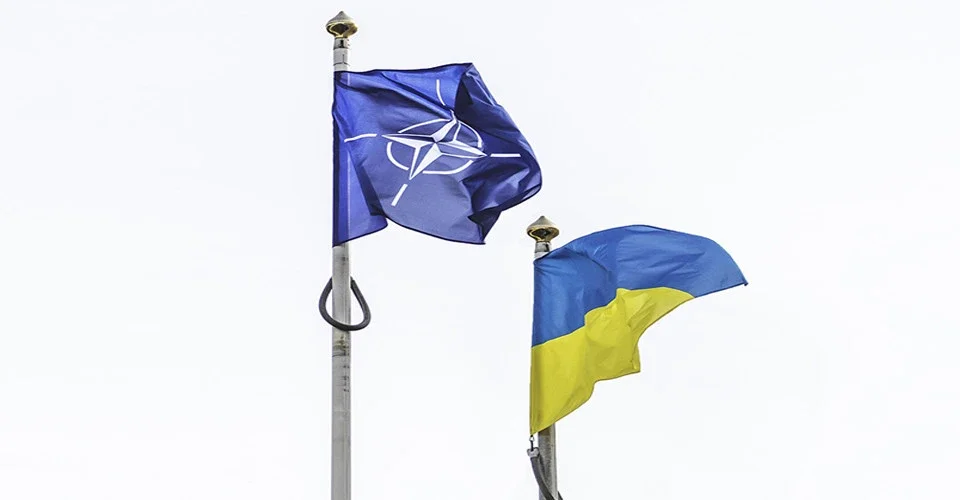
Europe has been handed two strategic signals in rapid succession. The defeat of Viktor Orbán removes one of the most persistent internal obstacles to stronger European alignment on Ukraine, while the election in Bulgaria — where Rumen Radev has emerged with a powerful mandate amid renewed questions about Sofia's posture toward Moscow — is a reminder that uncertainty inside Europe has not disappeared. One development offers encouragement, the other caution. Together, they underscore a larger truth: Ukraine's place in NATO is not less urgent than before. It may be more urgent.
For years, critics argued Ukraine would burden NATO — that admitting Ukraine would import instability, drain resources, and increase risk. That argument has been overtaken by events. Ukraine would not weaken NATO; it would strengthen it. Not simply because of the size of its military or the sacrifices it has made, but because it brings something money alone cannot buy: experience and certainty.
Europe is rearming. Defense budgets are rising, ammunition production is increasing, and new investments are being announced across the alliance. But no amount of spending substitutes for knowing how to use force under the pressures of modern war. Weapons without experience are inventory. Deterrence without tested doctrine is theory. Budgets without operational knowledge are aspiration. Ukraine brings what years of additional NATO spending cannot rapidly produce: hard-won battlefield knowledge in missile defense, electronic warfare, drone warfare, dispersed command under fire, and adaptation against a major military power. That is not merely a contribution. It is an incalculable strategic asset.
Europe can buy more arms. It cannot buy what Ukraine has already paid for in blood.
What NATO needs now, above all, is certainty — certainty that deterrence is credible, certainty that Europe can defend itself even amid shifting political moods in Washington, and certainty that the alliance possesses not only more weapons but the judgment and tested capability to use them. Ukraine offers that certainty. In the current moment, it may be one of the clearest sources of strategic certainty available to Europe.
That matters especially for Europeans. The question of whether the United States will remain a fully engaged ally is no longer hypothetical. European capitals are already planning for a future in which the continent must carry more of its own defense. President Donald Trump has openly expressed frustration with NATO allies over their unwillingness to support U.S. operations against Iran, and reports that Washington has weighed punitive troop repositioning should not be dismissed as political theater alone. Whether those threats materialize is almost beside the point. The signal has been sent: Europe cannot build its security on assumptions about permanent American political constancy.
That makes the case for Ukraine stronger, not weaker.
A stronger European pillar inside NATO — one with genuine operational depth, not merely larger defense budgets — requires exactly what Ukraine brings. Membership would not only add a proven military force to the alliance. It would help Europe become the strategic actor it now recognizes it must be.
Recent political shifts reinforce the point. The removal of a chronic spoiler in Budapest does not eliminate internal division, and the uncertainty signaled in Sofia is a reminder that ambiguity still carries costs. The alliance should be adding certainty where it can. Ukraine offers it in a form no defense budget can manufacture.
This evolving reality doesn’t require the dismantling of NATO, but it does call for NATO to become more flexible, more responsive, and more self-sufficient, particularly among its European members. Ukraine’s membership would be the catalyst for this transformation, ensuring that Europe remains a credible military power capable of defending its interests with or without U.S. assistance.
The old argument was that NATO would protect Ukraine. The emerging argument — and the more urgent one — is that Ukraine would help protect NATO, and help Europe protect itself. In an age when the continent can no longer assume others will carry the burden, that may be the strongest argument for membership yet.
While Ukraine’s immediate NATO membership is crucial as long as the U.S. remains a key ally, the argument here also applies to a future where NATO’s European members may need to bear a greater share of the burden — whether the U.S. remains as committed or not. Europe must recognize that NATO’s future cannot rest solely on American guarantees. While NATO remains essential, the alliance must begin to position itself with a strategic independence that accounts for the shifting political landscape in Washington. This does not mean abandoning the U.S. partnership, but it does mean Europe must be ready to lead the charge in defense matters when necessary, with Ukraine at the forefront of that effort.