the cost of hesitation
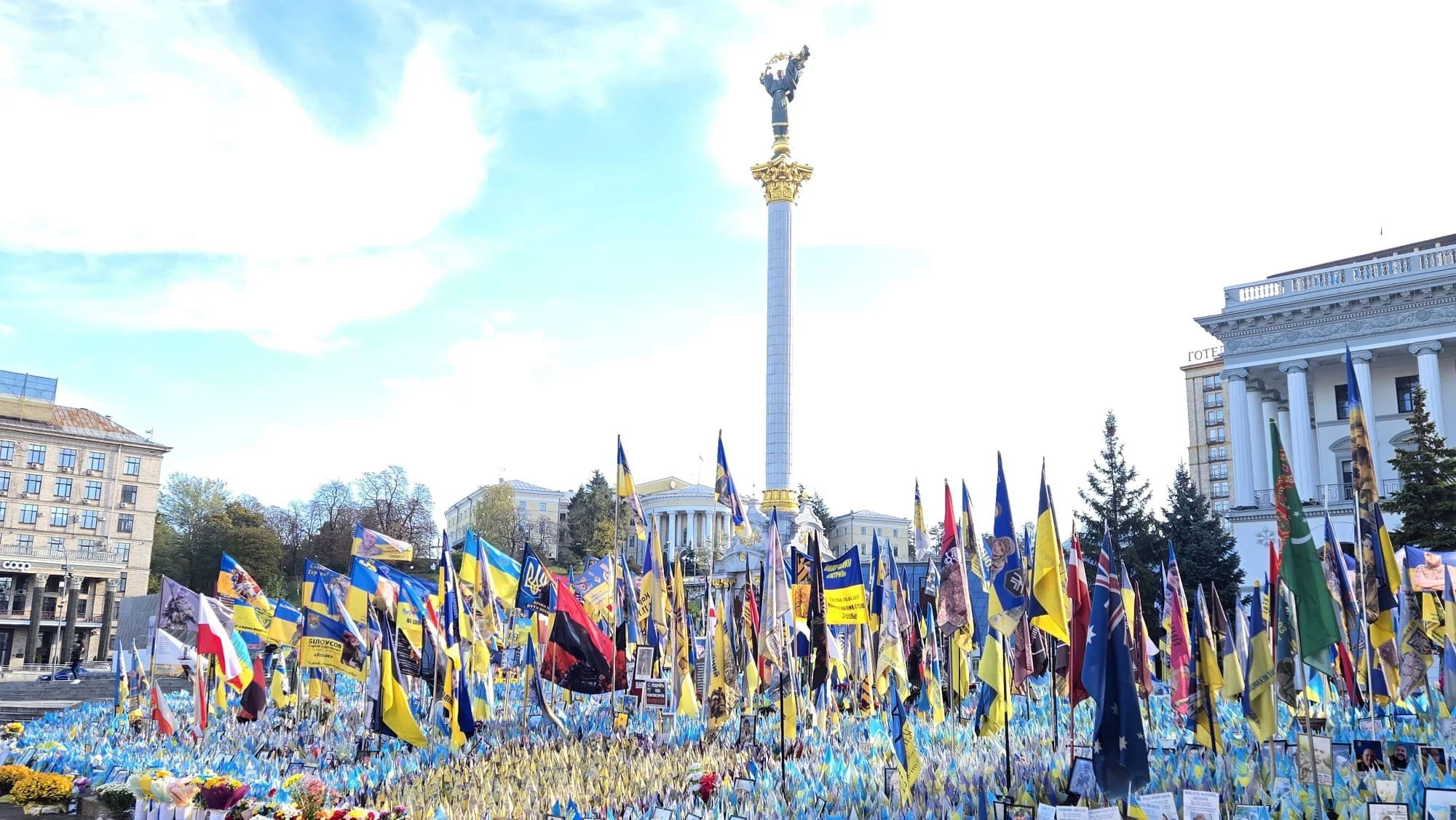
Four years into the full-scale war between Ukraine and Russia, the world stands at a moral crossroads it has been unwilling to confront honestly. Ukraine has done everything that has been asked of it—and more. It has fought with courage, buried those killed with dignity, protected Europe’s eastern flank, and defended the basic principle that borders cannot be redrawn by brute force. Yet the so-called free world has responded with hesitation, incrementalism, and fear of escalation.
History will not remember this moment kindly.
Ukraine did not ask for this war. It did not provoke it. It did not threaten Moscow. It was invaded because it chose sovereignty over subservience, democracy over dictatorship, Europe over empire. For four long years, Ukrainian soldiers, civilians, and leaders, including President Volodymyr Zelensky, have carried the burden not just of national survival but of defending the post–World War II order itself.
And what has the free world offered?
Enough weapons to survive, rarely enough to win. Enough funding to endure, rarely enough to end it. Enough rhetoric to sound resolute, rarely enough resolve to act decisively.
Let us be candid: perhaps this war could not have been entirely avoided. But it could have been confronted earlier. It could have been shortened. It could have been ended with overwhelming clarity of purpose. Instead, Western capitals chose caution over conviction. They feared provoking Moscow more than they feared the precedent of conquest. They worried about escalation more than erosion—erosion of deterrence, erosion of credibility, erosion of the rule that sovereign nations cannot simply be swallowed whole.
Now Ukraine faces a grim reality: peace, under current conditions, may require surrendering land seized by force. That is not peace. It is coerced concession — capitulation by another name. When territory taken through invasion is legitimized at the negotiating table, the message travels far beyond Eastern Europe. It tells every authoritarian power that patience and brutality can outlast democratic resolve.
What the world is witnessing in these so-called negotiations is not good-faith diplomacy but strategic theater. Moscow invokes the language of peace to consolidate its gains, distort the truth, and fracture Western unity. These talks are not designed to end the war; they are designed to win it slowly, exploiting Western hesitation.
If Ukraine is compelled to trade land for silence, the consequences will not be regional; they will be global. Taiwan will hear it. The Baltics will hear it. South Korea will hear it. The South China Sea will hear it. Every fragile border and frozen conflict will hear it. The lesson will be simple: invade, endure sanctions, wait for division, and eventually, the world will adjust.
None of this diminishes Ukraine’s extraordinary resilience. If anything, it magnifies it. A nation of 40 million has withstood one of the world’s largest militaries. Civilians have kept schools open in bomb shelters. Farmers have harvested fields under drone fire. Journalists have reported from rubble. Soldiers have fought village by village, trench by trench. Ukraine has proven it deserves not only independence but admiration.
But admiration without decisive action is hollow.
The uncomfortable truth is this: had the free world acted with overwhelming force - militarily, economically, and strategically - from the outset, this war might not be entering its fifth year. Instead, aid was calibrated to avoid “provoking” Russia rather than to secure Ukrainian victory. Sanctions were phased rather than immediate and total. Advanced weapons were delayed for months - and still not available. Every hesitation costs lives.
We now confront a dangerous possibility: that Ukraine, exhausted and battered, may accept a settlement that leaves occupied territories under Russian control. If that happens, the war will not truly end. It will pause. It will freeze. It will fester. And it will return, either in Ukraine or somewhere else, because the underlying lesson will have been learned by those who seek to dismantle the international order.
The principle at stake is not abstract. It is the foundational rule that has prevented large-scale territorial conquest in Europe for generations. If that rule collapses, we will enter a far more unstable era, one where strength, not law, defines borders.
Ukraine has done its part. The question is whether the free world will finally stand up and do its part before the future is written in favor of evil vs good, authoritarianism vs freedom.
If we allow a sovereign democracy to be partitioned by force because we lacked the will to finish what we began, we will have signaled something far more dangerous than restraint. We will have signaled decline.
Let us not be naive again. Deterrence is not rhetoric. It is capability. It is action. Boots on the ground, planes in the air, and ships on the seas. This is clarity. It is the unmistakable willingness to defend what we claim to value.
And those who wish to conquer the free world will be watching - and they will not hesitate if we continue to do so.